
 English
 中文简体
中文简体 Español
Buyers evaluating Turf Car Mats for outdoor-use vehicles and off-road interiors increasingly ask how the product handles water and loose debris, rather than how closely the surface mimics a natural lawn. The visible pile carries much of the visual appeal. Still, the backing layer beneath it does the functional work, and factories producing Turf Car Mats treat backing density as a separate engineering decision from pile appearance.
Pile Density And Yarn Construction
Manufacturers building Turf Car Mats select yarn denier and stitch count based on expected foot traffic rather than visual density alone. A denser pile resists matting under repeated boot pressure, which matters more for work trucks and outdoor recreational vehicles than for passenger cars used mainly on paved roads. Thicker yarn strands increase abrasion resistance but also raise material cost, so factories producing Turf Car Mats for budget-focused wholesale orders typically balance strand thickness against a target price point rather than durability alone. Tufting machines set stitch spacing according to the intended use case, with tighter spacing producing a firmer pile that holds its shape longer under sustained weight.
Backing Material And Drainage Channels
The rubber backing material beneath the turf pile determines how water moves once it passes through the surface fibers. A flat, non-perforated backing traps moisture against the vehicle floor, while backing molded with drainage channels lets water travel toward the mat's edge rather than pooling beneath the driver's feet. Factories producing Turf Car Mats for markets with heavy rainfall or frequent off-road use typically mold these channels directly into the backing during the pressing stage, since adding drainage grooves after the backing has cured is not practical at production scale. Rubber backing material thickness also affects how well the mat resists curling at the edges, a common complaint with thinner backing exposed to temperature swings inside a parked vehicle.
UV Stability And Color Retention
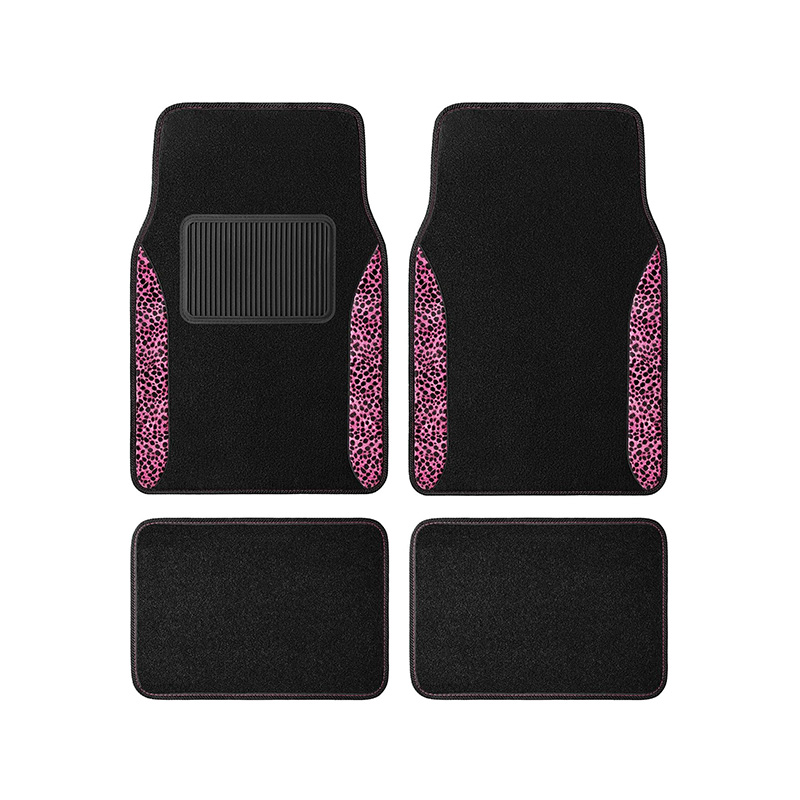
Turf pile made from standard polypropylene yarn tends to fade within a single outdoor season if left exposed to direct sunlight through a windshield. Suppliers producing Turf Car Mats for export markets with intense UV exposure typically specify a UV-stabilized yarn additive during extrusion, a step that raises material cost slightly but extends visible color retention well beyond untreated yarn. Green pile shades fade faster than darker synthetic-turf colors under equivalent sun exposure, which is one reason buyers sourcing Turf Car Mats for hot-climate distribution often request accelerated weathering test data before confirming a color specification rather than relying on the supplier's general durability claims.
Trim And Fit Considerations
Buyers comparing turf-style mats against standard carpet or rubber floor mats typically evaluate a consistent set of fit-related factors before placing bulk orders:
- Whether the mat ships trimmable to fit multiple vehicle footwells or requires a model-specific die cut
- Backing flexibility at low temperatures, since stiff backing can crack when trimmed in cold storage conditions
- Heel-pad reinforcement placement, relevant for driver-side wear patterns
- Edge binding method, which affects how cleanly a trimmed edge holds its shape over time
A universal-fit backing needs enough flexibility to trim cleanly with a utility knife without the rubber backing material cracking along the cut line, a detail that becomes more difficult to guarantee as backing density increases for drainage performance.
Production And Quality Control
Quality checks on Turf Car Mats production lines typically focus on backing-to-pile bond strength, since delamination between the two layers is the common field failure reported by distributors. Factories test bond strength by pulling sample sections under controlled tension before releasing a production batch, catching adhesive inconsistencies that would otherwise surface only after months of vehicle use. Dimensional consistency across a production run also matters for buyers stocking multiple vehicle-specific sizes, since even small variances in mold tolerance can leave a mat that fits poorly against the footwell trim it was designed for.
 View More >>
 View More >>
 View More >>
 View More >>
 View More >>
 View More >>



