
 English
 中文简体
中文简体 Español
Many people think a car steering handle cover is only a decorative accessory. In actual production, the product involves far more detail than many buyers notice at sooner glance.
Factories producing steering wheel covers usually pay attention to material expansion, stitching tension, inner ring friction, and temperature resistance long before appearance design enters the discussion.
This is because a steering wheel is one of the few interior parts continuously touched during driving. Once the surface feels unstable, slippery, or uneven, drivers notice it immediately.
That is why experienced manufacturers often focus more on processing details than visual styling alone.
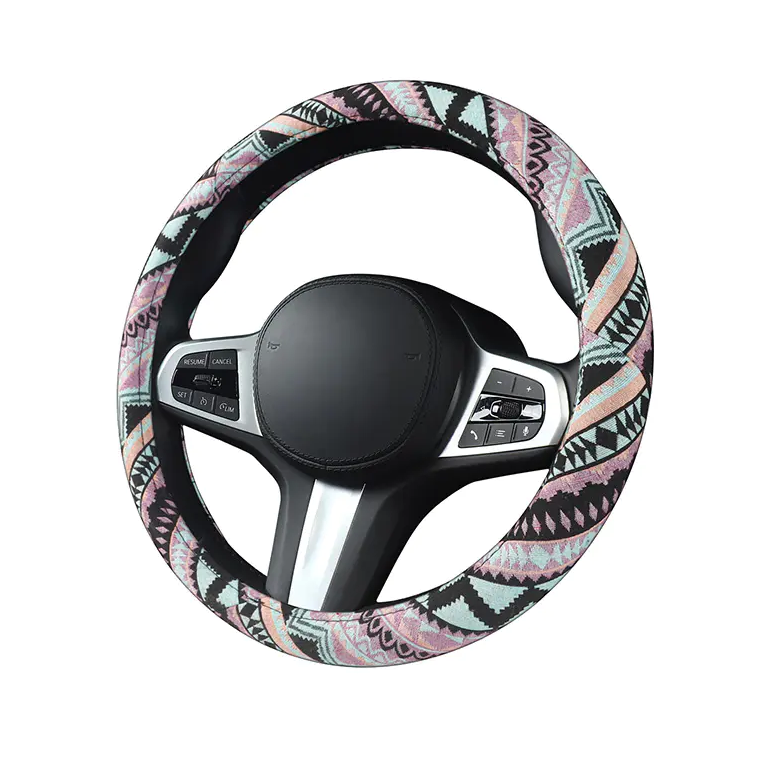
Material Selection Changes Surface Feel
The thing affecting a car steering handle cover is not color or pattern. It is material behavior under temperature changes.
Inside parked vehicles, cabin temperatures rise very quickly during summer. Low-grade synthetic materials often harden, become sticky, or release strong odors after long heat exposure.
For this reason, factories usually test materials under both high-temperature and low-temperature conditions before mass production.
Common materials include:
- PU leather
- microfiber leather
- PVC materials
- genuine leather
- mixed composite fabrics
Each material behaves differently once stretched around the steering wheel frame.
Microfiber generally provides softer friction feedback, while PVC-based covers are more cost-sensitive but may age faster under UV exposure.
That difference becomes obvious after several months of regular driving.
Inner Layer Friction Matters More Than Appearance
A car steering handle cover may look good externally but still perform poorly if the inner layer structure is unstable.
The inside lining determines whether the cover shifts during steering movement. Once micro-sliding appears between the wheel and the cover, driving feel becomes inconsistent.
This is why many factories use anti-slip rubber lining or textured inner materials instead of smooth backing surfaces.
In production workshops, technicians often pay close attention to:
- inner ring compression
- elastic recovery
- friction stability
- heat expansion behavior
- stitching deformation
The goal is not only installation tightness. The cover also needs to remain stable after continuous hand pressure and temperature cycling.
Stitching Quality Usually Reveals Manufacturing Level
Experienced buyers often judge a car steering wheel cover by the stitching area first.
Decorative patterns are easy to copy. Consistent stitching tension is harder to maintain during mass production.
If stitching pressure becomes uneven, several problems appear over time:
- edge lifting
- material wrinkling
- seam deformation
- loose hand feeling
- faster surface wear
This becomes more obvious on hand-sewn steering wheel covers because tension consistency directly affects final fitting performance.
Factories with stable sewing processes usually control thread spacing very carefully, especially around curved sections where material stress concentrates during installation.
Why Steering Wheel Diameter Control Is Strict
Many buyers assume steering wheel covers are universal products. In reality, size deviation tolerance is relatively strict.
A car steering handle cover normally needs controlled elasticity because steering wheel diameters vary between vehicle models.
If the cover is too loose, rotational movement appears during driving. If it is too tight, installation becomes difficult, and stitching stress increases.
That is why factories usually divide production molds according to wheel size ranges instead of relying on one standard specification for all vehicles.
For custom-fit products, even grip thickness and spoke position may affect pattern cutting dimensions.
Surface Texture Affects Driving Feedback
The texture of a car steering handle cover changes more than appearance.
Different embossing patterns influence grip friction directly during turning movement. Smooth glossy surfaces may look clean visually but often provide weaker hand stability during humid conditions.
That is why many automotive interior manufacturers prefer textured or perforated surface processing.
In practical driving conditions, especially during long-distance operation, hand fatigue becomes closely related to surface grip consistency.
Some factories even adjust foam thickness underneath the outer layer to change pressure distribution across the steering wheel.
This kind of detail is rarely visible in product photos but becomes noticeable during actual driving use.
Heat Pressing And Wrapping Require Experience
During production, material wrapping is one technical stage for a car steering handle cover.
Synthetic leather materials behave differently under heating conditions. Excessive temperature may stretch the surface too much, while insufficient heating creates wrinkles after cooling.
Workers usually need to balance:
- wrapping tension
- heat pressing time
- material recovery rate
- edge alignment
- seam positioning
This is especially important for multi-layer covers combining foam, leather, and anti-slip backing materials together.
Poor wrapping control often causes uneven surface pressure after installation.
Odor Control Became More Important Recently
In recent years, buyers have become more sensitive to interior odor problems.
A low-quality car steering handle cover sometimes releases noticeable chemical smells after long sunlight exposure inside closed vehicles.
This issue usually comes from cheaper adhesives, unstable synthetic coatings, or low-grade PVC compounds.
Professional factories now pay more attention to raw material VOC control because automotive interior environments remain enclosed for long periods.
For export products especially, odor performance increasingly affects customer feedback more than appearance alone.
Good Steering Covers Usually Feel Natural
Experienced drivers normally judge a car steering handle cover within the a few minutes of driving.
A good cover does not constantly remind the driver it exists.
The grip feels balanced, surface friction stays predictable, stitching does not irritate the hand, and the cover remains stable during steering movement.
That kind of consistency usually comes from manufacturing control rather than decorative styling alone.
In automotive interior products, comfort often depends more on small production details than obvious visual design.
 View More >>
 View More >>
 View More >>
 View More >>
 View More >>
 View More >>



